People
The DCRP community is comprised of a dedicated faculty and staff committed to serving a diverse group of students. We also have a proud and active alumni who continue to participate in the life of the department.
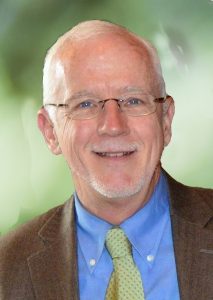
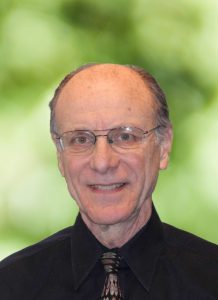
I became the new chairman of the department of city and regional planning in July. I follow in a long line of department heads, from Jack Parker to Emil Malizia, who have left deep legacies not only in DCRP but also in the broader planning profession.
The department's distinguished faculty members hold advanced degrees from the nation's most prestigious universities in city and regional planning and in a broad range of planning-related fields of study, including architecture, business, civil engineering, economics, human ecology, landscape architecture, law, public affairs, technological & environmental planning, transportation, urban studies, and water resources.
Faculty and students at DCRP carry out an extensive body of research and engage in a variety of projects working with local communities and clients. Ever wonder what projects you could be working on as a DCRP student? We asked a couple of Phil Berke's students.
When large pharmaceutical corporations like Glaxo and Burroughs Wellcome went through mergers, more than 2,500 people entered the labor market looking for new opportunities. Because of the Triangle's strong entrepreneurial support networks and world class research institutions, many of these highly skilled laborers opted to start their own spinoff businesses in the Research Triangle.
Incentives are under a bright national spotlight thanks to a recent New York Times series, which found state governments collectively spend over $80 billion per year on business attraction and retention.
No single issue is more “front and center” in the modern political debate than the state of our economy. According to DCRP's Bill Lester, there are circumstances in which incentives can work — if we’re smart about where, when and how we pursue them.
Dr. Lowe has been exploring institutional differences across local labor markets that not only shape how Latino immigrants apply and develop skill, but influence the kinds of barriers they face in harnessing their expertise for occupational advancement.
DCRP doctoral student, Erik Vergel presented the paper “Land Readjustment across planning cultures: a dialogue between Japan and Latin America in urban planning? The case of Colombia and Brazil” at the LASA Conference in San Francisco.
The educational backgrounds of students cover a wide range of undergraduate fields. Among them are architecture, biology, business, economics, engineering, forestry, geography, geology, history, landscape architecture, philosophy, political science, psychology, public administration, sociology, and urban studies.
Will the dream of homeownership start coming true for more minority and lower-income Americans? “I think so,” Roberto Quercia says, “because in the future the bulk of borrowers are going to be minority or low-income. ...Necessity, I think, will make us learn how to do this correctly.”
Each year, the UNC at Chapel Hill Graduate School recognizes graduate student research that is improving the lives of people in North Carolina and beyond. “Tina stands out among her cohort for her ability and willingness to take the lessons learned from her research and go the next logical step in authoring a tangible solution,” said Prevatte's adviser, Nichola Lowe.
US cities have long catered to a population that prefers to drive. How do you remake a city into a pedestrian dream?
The BBC's Franz Strasser went to Raleigh, North Carolina where he met with DCRP student Matt Tomasulo to discuss his Walk Raleigh project.
The Carolina Transportation Program recently hosted an Alumni Career Panel to discuss the best ways to find a job after graduation. The alumni panel relayed stories about how they entered the field, skills they recommend and even what DCRP courses they found to be most useful in their careers.
Design Revival 24 is rooted in the conviction that helping communities in need is a core calling of design professionals everywhere. 2010 DCRP Alumna, Kate Pearce describes her experience as a team of planners, landscape architects, architects and engineers volunteered 24 consecutive hours of design work to the town of Bluefield, WV.
DCRP's David Godschalk discusses features of 10 outstanding comprehensive plans from around the country in terms of how well they meet sustaining places principles.
(Opinion – Roberto Quercia)
Occupy Your Home advocates across the country have good reason to demonstrate their frustration over mounting foreclosures and market excesses. They have called for a National Day of Action to protest.
The Department of City and Regional Planning has had over 2,000 graduates since 1946.
Natural resource management is entering a new era in which rapid environmental and social change will inevitably alter ecosystems and the benefits they provide to society.
Opinion – William Rohe
The Triangle will vote on referendums to increase the local sales and use tax by one-half percent to support public transit. Do we need a passenger rail system in the Triangle? Careful study suggests the answer is, unequivocally, yes.
Altitude was the first air conditioner. Come summer since time immemorial, people around the globe—those who could afford it, at least—have fled malarial cities to seek refuge in cool verdant hills.
Everyone likes pictures! Checkout the DCRP Picasa Web Albums to see pictures of recent department events or find pictures of your classmates. New pictures added weekly.
The Department of City and Regional Planning • New East Building • CB# 3140 • UNC-CH • Chapel Hill, NC 27599-3140
phone: (919) 962-3983 • fax: (919) 962-5206 • email: dcrp@unc.edu
©
2011-2013
by The Department of City and Regional Planning at UNC Chapel Hill.